Is vinyl flooring good for hospitals?
Vinyl can be a strong choice for many hospital areas because resilient sheet vinyl and luxury vinyl products can offer durability, cleanability, stain resistance, and a broad range of visual options. The right selection depends on the room’s traffic, moisture exposure, rolling loads, infection-control protocols, and maintenance program. Clinical teams should also review seam, transition, and slip-resistance requirements with qualified flooring professionals.
What is hospital grade vinyl?
Hospital-grade vinyl generally refers to commercial resilient vinyl specified for demanding healthcare use rather than residential applications. Depending on the product, it may offer enhanced wear layers, chemical and stain resistance, low-maintenance surfaces, weldable seams, and compatibility with healthcare cleaning practices. “Hospital grade” is not a single universal standard, so project teams should verify product documentation, performance characteristics, and facility requirements before specifying it.
What is the flooring they use in hospitals?
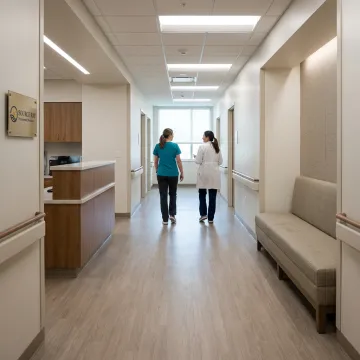
Hospitals commonly use resilient flooring systems such as sheet vinyl, luxury vinyl tile or plank, rubber, linoleum, and specialty safety flooring. Sheet products are often considered in clinical settings where seamless or heat-welded installations are desired. Carpet tile may appear in offices or waiting areas, while other materials may suit entrances or public spaces. Selection varies by department, cleaning protocol, traffic level, acoustics, and design goals.
What is the best flooring for hospitals?
There is no one best flooring type for every hospital space. The best option is one that matches the functional needs of a specific area, including infection-control practices, cleanability, rolling traffic, slip resistance, acoustic comfort, moisture exposure, and visual design. Patient rooms, corridors, operating-adjacent areas, lobbies, and staff spaces can require different performance characteristics. A coordinated specification helps balance these requirements across the facility.
How does Source Bay support healthcare flooring projects?
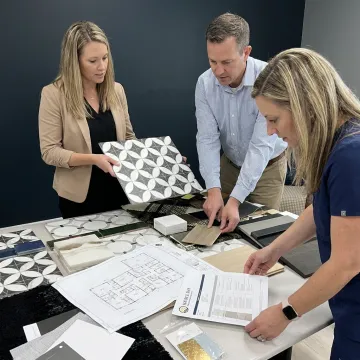
Source Bay Procurement Partners supports healthcare projects through FF&E procurement and design coordination. The team can help align finish selections with broader procurement-ready specifications for furnishings, textiles, wallcoverings, and fixtures. Its process covers discovery, strategic sourcing, freight management, sequenced warehousing, and installation oversight. For flooring-specific installation or technical product requirements, project teams should also engage appropriately qualified flooring and clinical-compliance professionals.
Can healthcare projects coordinate furniture and finishes together?
Yes. Coordinating furniture, fixtures, textiles, wallcoverings, and finish selections early can help maintain a consistent design direction and reduce conflicts between budgets, lead times, and installation sequencing. Source Bay’s design and procurement approach is intended to translate design intent into sourceable specifications. This coordination is particularly useful for patient rooms, waiting spaces, staff areas, clinics, and administrative environments.
How are healthcare procurement schedules managed?
A structured procurement schedule starts with scope and product alignment, then tracks sourcing, approvals, production, freight, warehousing, and installation milestones. Source Bay manages freight coordination and sequenced warehousing to align deliveries with the broader construction timeline. Early decisions on long-lead furnishings, fixtures, textiles, and finishes can give project teams more flexibility and reduce avoidable delivery disruptions later in the project.
Does Source Bay serve healthcare facilities nationwide?
Yes. Source Bay’s healthcare FF&E procurement services are available nationwide in the United States. The team supports hospitals, medical office buildings, outpatient clinics, ambulatory surgery centers, and long-term acute care facilities. Engagements are project-based and can include discovery, sourcing through a global manufacturer network, logistics coordination, and on-site placement oversight as part of a coordinated procurement program.