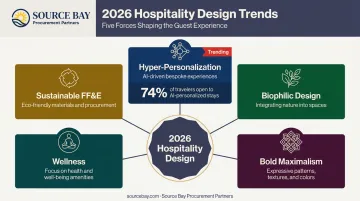
What makes 2026 different isn't that new trends have appeared. It's that several forces — AI-driven personalization, sustainability imperatives, wellness as a design standard, and a hunger for bold visual identity — have converged simultaneously, raising the baseline for what "good" hospitality design actually means.
For developers, designers, and operators, understanding these shifts isn't optional. The gap between properties that function and properties that build loyalty, command premium rates, and generate organic social visibility is increasingly a design gap.
Key Takeaways
- Hyper-personalization is moving from service into physical design: rooms now adapt to guest profiles through smart sensors and flexible spatial configurations.
- Biophilic design is now a structural commitment — properties are built around their natural environments from the ground up.
- Bold maximalism is replacing minimalism, with jewel tones, layered textures, and narrative-driven design creating shareable, identity-led spaces.
- Wellness runs through every touchpoint — circadian lighting, acoustic engineering, and cold plunge access are becoming standard specifications.
- Sustainable FF&E procurement is a first-phase requirement, not a finishing-stage consideration.
The Five Hospitality Design Trends Defining 2026
While aesthetics have always driven hospitality design conversations, 2026 trends reveal something deeper: every design decision is now anchored in how it makes guests feel, what it says about the brand, and how responsibly it was built.
Trend 1: Hyper-Personalization as a Design Imperative
Personalization has crossed from service into architecture. Guestrooms are now being designed with modular furniture that repositions for different guest profiles, adjustable environmental controls (lighting, scent, temperature), and mid-stay customization niches — alcoves built specifically for curated amenity placement.
Lobby zones follow the same logic, shifting function from morning wellness programming to evening social activation.
The data supports why this is accelerating. According to Oracle Hospitality research, 74% of travelers are interested in hotels using AI to better tailor services and offers, and 25% want room controls that auto-adjust based on pre-shared preferences.
Technology enables the adjustment. Spatial design determines whether that adjustment registers as a thoughtful touch or an unwanted intrusion — which is why personalization is now a design brief, not just a tech spec.
For procurement specialists like Source Bay Partners, this trend translates directly into FF&E specifications — manufacturer relationships with Samsung and BDL for digital and illumination systems, and Remington Lighting for custom fixtures, support the lighting customization layer that personalized environments require.
Trend 2: Biophilic Design and the Spirit of Place
Biophilic design in 2026 is no longer about a living wall in the lobby.
Properties are now being sited to preserve existing trees, built with mass timber as a primary structural material, and designed around coastal dunes, forest ecosystems, or desert landscapes — rather than imposing uniform brand standards on them.
1 Hotel Hanalei Bay on Kauaʻi is a strong reference point — the property uses local basalt, puka lava stone, eucalyptus poles, and reclaimed wood millwork throughout, creating an interior palette that couldn't exist anywhere else. Studio Gang's Populus in Denver took a different approach: a 265-room, LEED Gold-certified hotel whose facade references tree bark and whose design philosophy centers on connecting guests to the urban natural environment.
The American Express 2026 Global Travel Trends Report found that 58% of surveyed Millennials and Gen Z travelers want to experience nature and wildlife on their next trip — a figure that reflects appetite for landscape-responsive hospitality, not just generic green credentials.
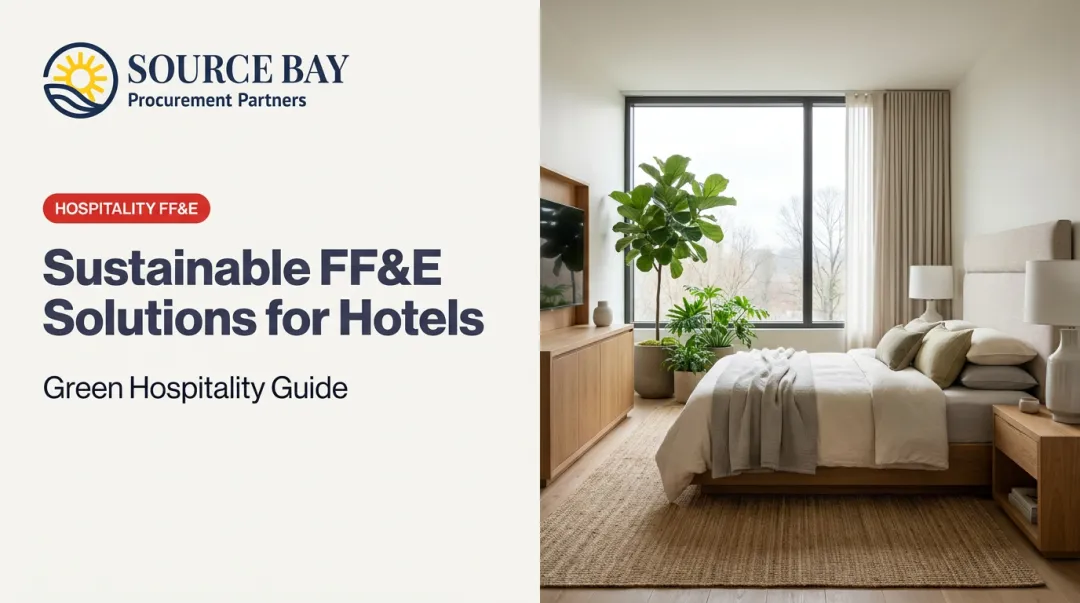
Natural stone, reclaimed wood, raw-edge surfaces, and locally sourced textiles are the material vocabulary of this trend. They communicate authenticity in a way that manufactured finishes simply cannot replicate.
Trend 3: Bold Maximalism and Expressive Aesthetics
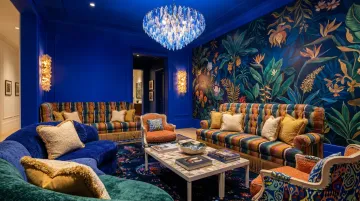
After years of subdued, neutral-forward minimalism, hospitality interiors are embracing maximalism — not chaos, but carefully curated visual storytelling. Jewel tones (emerald, sapphire, deep burgundy), layered textures (boucle, crushed velvet, tambour paneling), and eclectic pairings of vintage and contemporary elements are defining the next generation of hotel interiors.
Graduate by Hilton has championed this approach at scale, operating 35 hotels across the U.S. and U.K. with designs rooted in university tradition, local culture, and pop-nostalgia. Details like blue floral wallpaper, red chaises, and flower-shaped ceiling lights at The Randolph Hotel Oxford aren't accidental — they're intentional design moments that reward guests who look closely.
Social media is a significant driver here. Properties are designing "visual moments" — fluted tile archways, velvet lounge corners, hand-painted mural corridors — that generate organic guest content and strengthen brand identity. Expedia Group's 2024 research found 67% of travelers would pay more to stay at a hotel aligned with their preferred "vibe," and 40% specifically review interior photos when evaluating a hotel.
The discipline in 2026 maximalism is that every pattern, material, and object is chosen to reveal a layered narrative about the property — not added arbitrarily. Source Bay's manufacturer relationships with Schumacher and Fabricut for textiles and wallcoverings, combined with Neuco's artisan upholstery capabilities, give procurement teams the tools to execute this kind of curated, custom-driven approach.
Trend 4: Wellness as a Spatial Standard
Wellness has stopped being a spa amenity and started being a design principle. Guestrooms are being engineered for restorative sleep with blackout systems, sound-dampening materials, and circadian lighting — Hilton's 2026 Trends Report noted 90% of road-trip travelers identify a comfortable bed as the most important amenity. Park Hyatt New York's Sleep Suite by Bryte offers a real-world example of this direction.
Beyond sleep, the trend includes:
- Cold plunge access integrated into suite layouts (Santa Monica Proper Hotel has made this a recovery-focused amenity)
- Micro-zones in lobbies designed for breathwork or quiet reflection
- In-room fitness niches requiring intentional spatial planning
- Botanical installations in corridors that support sensory connection to nature
The Global Wellness Institute reports wellness tourism expenditures reached $894 billion in 2024, within a global wellness economy of $6.8 trillion growing at 7.9% annually. Properties that don't address wellness spatially aren't just missing a trend — they're ceding a measurable revenue segment to competitors who do.
Serta's commercial sleep solutions, available through Source Bay's network, represent one concrete procurement pathway for properties prioritizing the sleep wellness layer.
Trend 5: Sustainability as a Procurement-Level Decision
Sustainability has moved from a marketing statement to a material specification requirement. These categories are now being mandated at the procurement stage — not added as upgrades after budgets are set:
- PVC-free flooring
- Low-VOC finishes
- Locally sourced textiles
- Reclaimed materials
- Regionally crafted furnishings
The certification landscape reflects this shift. USGBC reports 4,512 LEED-certified and registered lodging projects representing 1.58 billion square feet as of March 2026. Green Key has certified more than 9,000 hotels in 90+ countries. Sustainability certification is no longer a differentiator — it is increasingly a market expectation.
Adaptive reuse is also gaining momentum. Giving historic materials new life simultaneously honors a property's heritage and reduces waste — and JLL's characterization of adaptive reuse as an accelerating urban development strategy underscores that this is a mainstream capital deployment choice, not a niche preference.
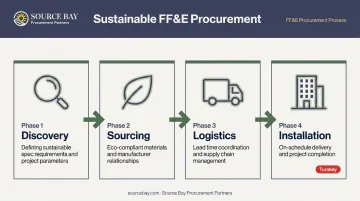
Sourcing eco-compliant materials across a full FF&E scope requires procurement partners who can navigate manufacturer relationships, extended lead times, and spec requirements before design intent is locked. Through its four-phase delivery model — Discovery, Sourcing, Logistics, and Installation — Source Bay Procurement Partners integrates procurement planning into the earliest design phases, which is exactly where sustainable specification decisions need to be made.
What's Driving These Trends
These trends share common roots. Understanding what's pushing them simultaneously helps design and development teams anticipate where they're going next.
Four forces are converging to reshape hospitality design at once:
- Post-pandemic traveler mindset: Guests now travel with intention, prioritizing experience over cost. The American Express 2024 Global Travel Trends Report found 77% of respondents ranked the right experience above price — and 84% planned to spend the same or more on travel. Premium design is no longer a differentiator; it's a baseline expectation.
- Technology capability: AI-driven personalization tools, smart room sensors, and predictive hospitality platforms give designers new tools to build adaptive environments. Hotel IT budgets reached 4.2% of revenue in 2023, with 100% of operators planning to hold or increase that investment in 2024, per Hospitality Technology research.
- Social media and brand identity: Visually shareable interior moments have become a legitimate marketing channel. Properties without a distinctive aesthetic identity lose visibility with design-aware younger travelers — the same cohort driving biophilic, maximalist, and wellness demand.
- ESG and investor expectations: Green building certifications and eco-material sourcing now directly influence development financing. CBRE has noted that investors pay a premium when ESG risks are well managed. Sustainability certification rates in the EU/UK have reached 40%, putting real competitive pressure on U.S. properties, where the rate sits at just 10%.
How These Trends Are Reshaping the Industry
Each of these trends creates ripple effects across operations, capital planning, and staffing. The most competitive properties in 2026 treat design as a strategic investment from day one — not a finishing cost.
Operational Impact
Trend-driven design is complicating FF&E procurement timelines. Sustainable materials, custom textiles, and artisan-crafted pieces carry longer lead times and require coordination across a wider network of manufacturer relationships. Procurement planning must begin in the earliest design phases — not downstream.
Flexible, multi-use spaces such as resimercial lobbies and convertible wellness zones require furniture that performs across multiple use cases without sacrificing aesthetics. That raises the quality and customization bar for every FF&E specification in the project.
Business Impact
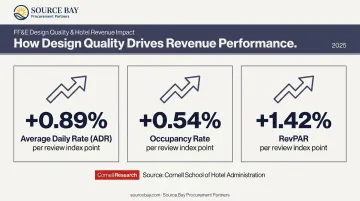
Cornell School of Hotel Administration research found that a 1-point increase in a hotel's ReviewPro Global Review Index correlates with 0.89% higher ADR, 0.54% higher occupancy, and 1.42% higher RevPAR. Guest perception of design quality flows directly to financial performance.
U.S. boutique hotels — often the earliest adopters of maximalist and biophilic aesthetics — achieved higher RevPAR than industry counterparts in 2024, according to The Boutique Hotel Report.
Independent properties using expressive design are outperforming branded chain hotels on review platforms and social reach, creating pressure on larger brands to accelerate design differentiation.
Workforce Impact
Complex, trend-driven design is increasing demand for specialists who bridge design intent and operational execution. Three roles in particular are moving from support functions to critical project positions:
- Procurement managers who can navigate extended lead times for sustainable and artisan-sourced materials
- FF&E coordinators who maintain specification integrity across multi-vendor supply chains
- Logistics specialists who align delivery sequencing with construction and installation schedules
Future Signals to Watch
The trends active in 2026 are early markers of deeper structural shifts. Design professionals and developers who track these signals now will enter the next development cycle with tighter spec accuracy and fewer procurement surprises.
Hyper-local FF&E: More properties are commissioning original artworks, bespoke furniture, and site-specific textile collections from local makers — moving away from catalog procurement toward curated, one-of-a-kind programs. Source Bay's bespoke sourcing capabilities and Neuco's artisan upholstery arm are already aligned for this direction.
Exclusivity zones as standard features: Private clubs, rooftop lounges, and invitation-only dining concepts are becoming embedded in full-service hotel programs. Each zone demands its own design language and procurement track — a complexity that experienced FF&E specialists are structured to handle, where generalist suppliers typically are not.
AI-assisted specification tools: Within 1–3 years, AI platforms will generate real-time FF&E recommendations based on brand guidelines, budget parameters, and trend data. Compressed design timelines will raise the bar for procurement accuracy and speed — leaving little margin for sourcing delays or spec errors.
Conclusion
Hospitality design in 2026 is driven by guest expectations, operational demands, and sustainability commitments working in concert — requiring smarter, more deliberate decisions at every stage, from site concept through FF&E delivery.
Properties that treat design as a strategic investment — not a line item to cut — tend to outperform on guest satisfaction and hold stronger long-term asset value. Executing these trends well, particularly as procurement complexity grows, requires experienced partners who understand both the design vision and the sourcing reality. That's precisely where firms like Source Bay Procurement Partners play a critical role, bridging architectural intent with the logistics of delivering it on schedule and within budget.
Frequently Asked Questions
What are the top hospitality design trends in 2026?
The five dominant trends are hyper-personalization (adaptive guestroom environments), biophilic design (landscape-responsive architecture and natural materials), bold maximalism (jewel tones, layered textures, expressive storytelling), embedded wellness (circadian lighting, sleep engineering, cold plunge access), and sustainability-driven FF&E specification at the procurement stage.
How is AI being used in hospitality interior design?
AI enables predictive personalization, allowing hotels to adapt guestroom lighting, temperature, scent, and layout to individual guest profiles. It's also reshaping FF&E specification tools, with platforms increasingly generating procurement recommendations based on brand guidelines and budget parameters in real time.
What is biophilic design in hospitality?
Biophilic design integrates natural materials, landscape-responsive architecture, and sensory connections to the outdoors into the built hospitality environment. In 2026, this means structural decisions : mass timber framing, site preservation, locally sourced stone — not just decorative greenery.
What is resimercial design and how does it apply to hotels?
Resimercial design blends residential comfort aesthetics (soft materials, warm finishes, home-like furniture) with commercial performance requirements. In hotels, it appears in lobbies designed to feel lived-in rather than institutional, and in hybrid work-lounge zones that serve both productivity and relaxation.
Why is sustainability important in hospitality FF&E procurement?
Guests and investors increasingly expect eco-conscious material choices: PVC-free flooring, locally sourced furnishings, and low-VOC finishes. These decisions directly affect a property's green certifications, operating costs, brand reputation, and development financing.
How does hospitality design affect guest loyalty and revenue?
Distinctive spaces drive higher satisfaction scores, repeat bookings, and social media visibility. Cornell research links a single point of improvement in online review scores to measurable gains in ADR, occupancy, and RevPAR — making design one of the clearest levers for revenue performance.